

Discussion Group: Cultural Translations of the Ten Commandments in Late Ming and Early Qing Jesuit Catechisms
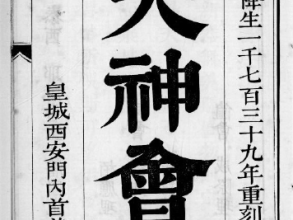
Upon their arrival in foreign lands, Jesuit translators devoted their efforts to the composition of the so-called essential catechisms, which aimed to introduce core ethical norms, ritual and liturgic aspects of Catholicism in plain language, so as to enable even the less educated strata of the population to be familiarised with its teachings. Because of their consolidated tradition in Europe, extensive adoption in worldwide missions and effective communication style, these texts have lately received increasing scholarly attention as examples of «intercultural/interreligious dialogue» (Amaladass 2017: 172). In China, authors mainly employed the dialogic format to present Catholic teachings in Chinese terms, providing linguistic or doctrinal clarifications of some of the most controversial aspects. In this session of the OCCT Discussion Group, Dr Giulia Falato, taking the translations of the Ten Commandments (Shijie 十誡) from a corpus of 17th century essential catechisms as case studies, proposed to examine how incompatible aspects of the local culture were identified and addressed by Jesuit translators. Through an analysis of how the discourse on filiality (fourth commandment), murder (fifth commandment) and licentiousness (sixth commandment) was appropriated and expounded to argue against widespread social and cultural practices, she proposed a redefinition of the translators' identity and of the doctrine they presented.
This event required registration. Please register via the form here.
Giulia Falato works as a Lecturer in Chinese Studies at the University of Oxford, China Centre and as a Senior College Lecturer at University College, Oxford. Her main research interest lies in the history of Sino-Western cultural relations, with a particular focus on exchanges in the fields of pedagogy, moral philosophy and lexical innovation. She also works on educational theories and practices in early imperial and medieval China. She is the author of a monograph based on her doctoral dissertation, Alfonso Vagnone's Tongyou Jiaoyu 童幼教育 (On the Education of Children, c. 1632). The earliest encounter between Chinese and European pedagogy (Brill, 2020) and co-editor of a volume in Italian language titled: Virtuous youngsters and where to find them: educational pathways and representations of young people in the Chinese pedagogical and literary traditions (Centro Studi Martino Martini, 2022).






