Discussion Group: Modernist Mathematics in Late Imperial Russian and Early Soviet Culture
Monday 30 November 2026
12:45 - 14:00
Seminar Room 10, St Anne's College
Emma Baxter (Oxford)
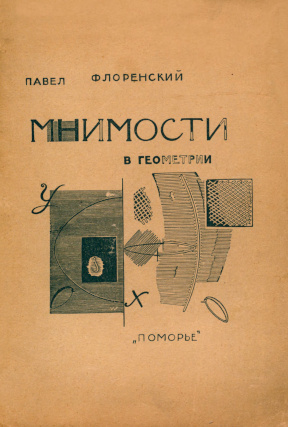
In the nineteenth and early twentieth centuries, the field of mathematics experienced fundamental changes, which Jeremy Gray (2008) has labelled the ‘modernist transformation’ of mathematics, because of the growing levels of abstraction and emphasis on form in mathematics. Gray also characterises this period of radical change as one of anxiety, with mathematicians growing increasingly concerned over foundational issues in mathematics. Gray’s approach has been significant in the history of mathematics, with many others drawing on this framework, and some criticising its limits and usefulness, such as Leo Corry (2023). This paper discusses Gray’s framing of modernist mathematics in reference to my own studies on late Imperial Russian and early Soviet mathematics and culture, and considers to what extent this framework helps us to understand the shifts occurring in mathematics (and indeed in wider culture) in this period.
Corry, Leo, ‘How Useful Is the Term “Modernism” for Understanding the History of Early Twentieth-Century Mathematics?’, in The Richness of the History of Mathematics, ed. by Karine Chemla and others (Springer, 2023), pp. 393–423
Gray, Jeremy, Plato’s Ghost: The Modernist Transformation of Mathematics (Princeton University Press, 2008).
Emma Baxter is a third-year DPhil student in the MML faculty, based at Wadham College. Her research focuses on the rise of new ideas in mathematics in early twentieth-century late Imperial Russia and the early Soviet Union, and the connections between these ideas and other areas of culture, including literature, art, religion, pedagogy, and linguistics.
Upcoming events at OCCT