

Discussion Group: The Short Story and Strange Tone
Discussing her choices of prizewinning stories for the 2022 edition of the O. Henry Prize, Valeria Luiselli identifies a quality of strangeness: these stories 'straddle the familiar and the unfamiliar', presenting a world which 'immediately opens up to us, as if we already know or remember it', but still presents 'the unknowable, the unpredictable, and the strange. Luiselli's image of the acrobatic story, keeping two opposites connected through the stretched-out tension of its body, is energetic and alluring; my paper will trace the presence of this kind of strangeness through the collection.
Writing across eight different original languages, fifteen months, and seventeen different original publication venues, Iris Perason argued that the collection provides an opportunity for critics to rethink existing theories of the strange. If particular stories yoke strangeness to the pandemic and to contemporary global issues, just as many show strangeness emerging from personal events, tragedies, births, natural and unnatural shifts. Some approach strangeness as an ontological or textual problem. Analysing stories by Olga Tokarczuk, Yohanca Delgado and Gunnild Øyehaug, and negotiating between accounts of strangeness by Victor Schklovsky, Sigmund Freud, Derek Attridge and Harold Bloom, Pearson suggested that strangeness might be helpfully modelled not as plotted event nor reflected socio-political experience, but rather as mood or tone, in Sianne Ngai's sense of the word. That is, the strangeness in these prizewinning stories cannot be reduced to a specific scene, character, or sentence, but occupies the whole text as an overwhelming tonal effect.
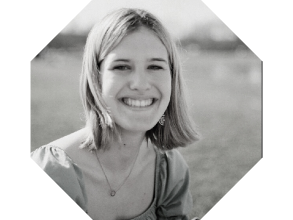
Iris Pearson is a PhD student at the New College, Oxford. Her thesis looks at form and repulsive readerly affect in the work of four late twentieth-century experimental English novelists: Muriel Spark, Angela Carter, B.S. Johnson and Anthony Burgess. She also works on Latin American literature and experimental criticism, and has articles published or forthcoming in the Latin American Literary Review and The Journal of Avant-Garde Studies. At Oxford, she co-convenes the Modern/Contemporary Literature Graduate Forum, as well as a series of 'Workshops in Experimental Criticism', alongside Joe Moshenska.






