

Polkadot Wounds: Anthony Capildeo in conversation with Malachi McIntosh
Anthony Capildeo's poetic practice has always flourished as part of conversation with other writers (dead and living) and other people. Capildeo's new collection, Polkadot Wounds-out this July with Carcanet Press-continues to develop their eclectic and meticulous examination of translation as a lived experience, method, and source of poetic expression. Ranging from Norman Castles and local martyrs to the 'landskips' of Britain and beyond, stopping on the way to play off Dante's Divina Commedia and address the pandemic, Polkadot Wounds maps sensitively and often joyously the plurilingual and pluritemporal landscapes of our past, present, and future.
This poetry reading of Polkadot Wounds will be followed by a conversation with Malachi McIntosh.
Register via Eventbrite, here.
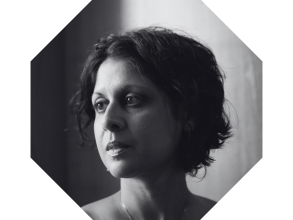
Anthony (Vahni) Capildeo FRSL is a Trinidadian Scottish writer of poetry and non-fiction. Currently Professor and Writer in Residence at the University of York, their site-specific word and visual art includes responses to Cornwall's former capital, Launceston, as the Causley Trust Poet in Residence (2022) and to the Ubatuba granite of the Henry Moore Institute in Leeds (2023), as well as to Scottish, Irish, and Caribbean built and natural environments. Their numerous books and pamphlets, from No Traveller Returns (Salt, 2003), Person Animal Figure (Landfill, 2005) onwards, are distinguished by deliberate engagement with independent and small presses. Their work has been recognized with the Cholmondeley Award (Society of Authors) and the Forward Poetry Prize for Best Collection. Their publications include Like a Tree, Walking (Carcanet, 2021) and A Happiness (Intergraphia, 2022). Their interests include silence, translation theory, medieval reworkings, plurilingualism, collaborative work, and traditional masquerade. Their latest book, Polkadot Wounds, is forthcoming with Carcanet in July.
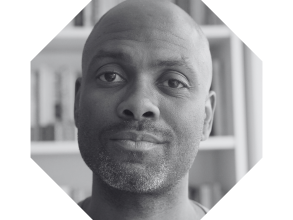
Malachi McIntosh is Associate Professor of World Literatures in English at the University of Oxford and the Barbara Pym Tutorial Fellow in English at St. Hilda's College. He is the author of Emigration and Caribbean Literature (2015) and the editor of Beyond Calypso: Re-Reading Samuel Selvon (2016). He is a 2023 British Library Eccles Fellow and the recipient of a Royal Society of Literature Giles St Aubyn Award (2022). From 2019-2022, Malachi was the Editor and Publishing Director of Wasafiri, the magazine of international contemporary writing. Prior to that, he co-led the Runnymede Trust's multiple-award-winning Our Migration Story history education project and taught at the universities of Cambridge and Warwick. His first collection of short stories, Parables, Fables, Nightmares was published by the Emma Press in 2023. He is currently working on a book on the Caribbean Artists Movement.






